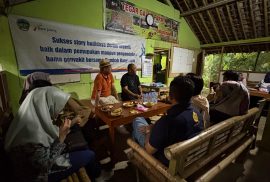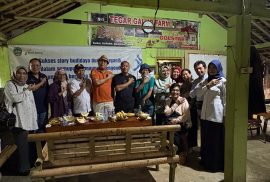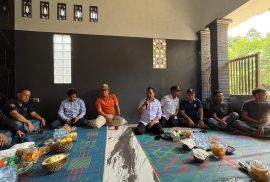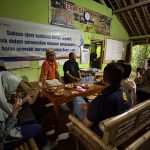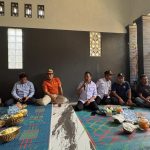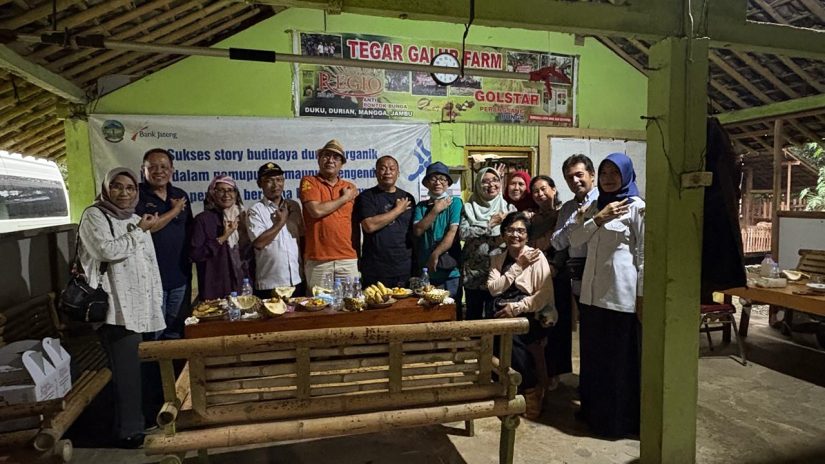
The Department of Plant Pests and Diseases (HPT), Faculty of Agriculture, Universitas Gadjah Mada (UGM), conducted a community service program in Plana Village, Somagede Subdistrict, Banyumas Regency, on February 4, 2026. The activity involved several lecturers from the Department of HPT, namely Prof. Dr. Ir. Achmadi Priyatmojo, M.Sc., IPU., Prof. Dr. Ir. Y. Andi Trisyono, M.Sc., Dr. Suputa, S.P., M.P., Prof. Dr. Ir. Triwidodo Arwiyanto, M.Sc., as well as retired lecturer Dr. Ir. Sri Sulandari, S.U. The community service activity was carried out at Mr. Ganjar’s durian orchard located in Plana Village, Somagede Subdistrict.
The orchard is recognized as one of the local durian development centers, featuring a distinctive variety known as Durian Kromo. Based on field identification and laboratory analysis, two major pathogens were identified as potential threats to plant health and productivity: Phytopythium vexans and Globisporangium splendens. Both pathogens are known to infect root systems and plant tissues, causing root rot symptoms and reduced plant vigor.
As a control measure, the orchard management has implemented a biological control strategy by utilizing the antagonistic agent Trichoderma. The application of Trichoderma is carried out through soil drenching directly to the root zone, allowing the beneficial microorganism to colonize the rhizosphere and suppress the growth of soil-borne pathogens.
This community service initiative supports the achievement of the Sustainable Development Goals (SDGs), particularly SDG 2 (Zero Hunger) through improving local durian productivity, SDG 4 (Quality Education) through knowledge and technology transfer to farmers, and SDG 9 (Industry, Innovation, and Infrastructure) through the implementation of innovative and environmentally friendly biological control methods. The collaboration between higher education institutions and farmers also reflects support for SDG 17 (Partnerships for the Goals) in advancing sustainable agricultural development.