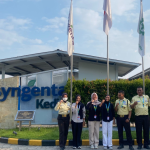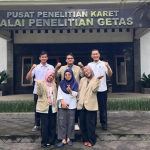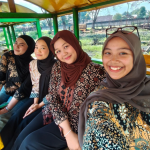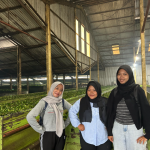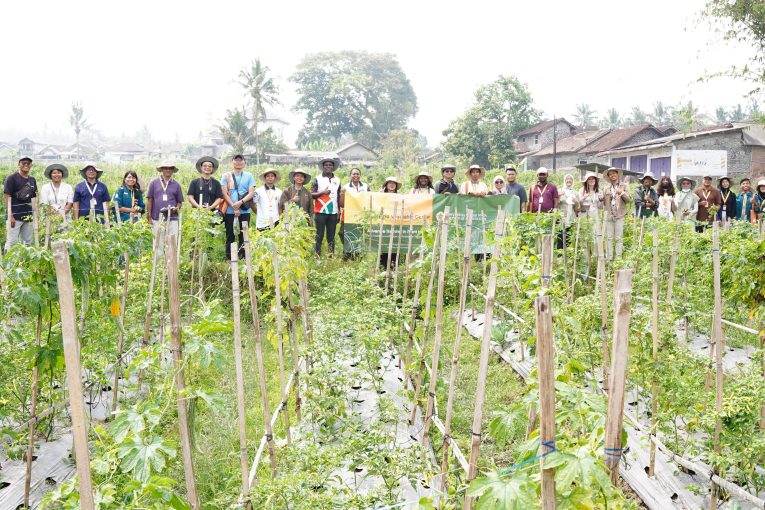


Magelang, June 27, 2026 – The Advanced Training in Plant Health: From Field Surveillance to Molecular Technologies, organized by the Faculty of Agriculture, Universitas Gadjah Mada (UGM) in collaboration with the World Vegetable Center (WorldVeg), officially concluded on Saturday, June 27, 2026, with a Farmer Visit in Dukun District, Magelang Regency. As the final activity of the training program, the field visit was designed to provide participants with firsthand experience in observing how the concepts introduced throughout the five-day course—including field surveillance, molecular diagnostics, resistance screening, and Integrated Pest Management (IPM)—are implemented in real horticultural production systems.
Participants and facilitators visited the chili farm of Mr. Pulung Widi Handoko, S.P., a horticultural farmer and an alumnus of the Department of Plant Pests and Diseases, Faculty of Agriculture, UGM. During the visit, participants observed crop management practices, plant health conditions, and various pest and disease management strategies implemented on the farm. The interactive discussions enabled participants to exchange ideas directly with the farmer while gaining valuable insights into the practical challenges of maintaining crop productivity under continuous pest and disease pressure.
During the discussion session, Mr. Pulung Widi Handoko emphasized that successful chili cultivation depends not only on agricultural inputs but also on continuous field monitoring, early detection of pest and disease symptoms, and timely management decisions. He shared his experience in implementing Integrated Pest Management (IPM) through regular pest surveillance, field sanitation, appropriate variety selection, crop environment management, and the use of biological control agents to reduce reliance on chemical pesticides while maintaining sustainable crop production.
The Farmer Visit also enabled participants to connect the scientific knowledge acquired during the training with real-world agricultural practices. Diagnostic techniques, disease identification methods, surveillance approaches, and resistance screening concepts previously learned in classrooms and laboratories could now be understood within the context of on-farm decision-making. Through direct interaction with an experienced farmer, participants recognized that sustainable plant health management requires close collaboration among researchers, extension specialists, technology developers, and farming communities.
The visit further highlighted the important role of university alumni in bridging academic knowledge and agricultural practice. As a graduate of the Department of Plant Pests and Diseases, UGM, Mr. Pulung Widi Handoko demonstrated how scientific knowledge gained during higher education can be effectively translated into practical solutions for addressing horticultural production challenges. The discussions also created opportunities for future collaboration among universities, researchers, students, and farmers in developing innovative and applicable plant health management strategies.
The Farmer Visit officially marked the conclusion of the Advanced Training in Plant Health: From Field Surveillance to Molecular Technologies. Throughout the six-day program, participants gained comprehensive knowledge covering field surveillance, pest and disease diagnostics, molecular identification, bioinformatics, marker-assisted plant breeding, seed health, and integrated pest management. The organizers hope that the scientific knowledge, practical skills, and international networks established during the training will empower participants to strengthen sustainable plant health systems and agricultural resilience in their respective countries.
The Farmer Visit, as the closing activity of the Advanced Training in Plant Health: From Field Surveillance to Molecular Technologies, reinforced the program’s contribution to the United Nations Sustainable Development Goals (SDGs). By facilitating knowledge exchange between researchers, academics, and farmers, the program supports SDG 2 (Zero Hunger) through sustainable crop production and improved plant health management. It also contributes to SDG 4 (Quality Education) by promoting experiential learning, SDG 9 (Industry, Innovation and Infrastructure) through the adoption of innovative diagnostic and crop protection technologies, and SDG 17 (Partnerships for the Goals) by strengthening collaboration among universities, international organizations, research institutions, and farming communities to build more resilient and sustainable agricultural systems.