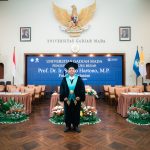
Yogyakarta, September 22, 2026 – The Faculty of Agriculture, Gadjah Mada University (UGM) has again expanded its ranks of professors with the inauguration of Prof. Dr. Ir. Sedyo Hartono, M.P., as Professor in Plant Virology. The inauguration ceremony took place on Tuesday (September 22, 2026) at the UGM Hall and was organized by the Gadjah Mada University Board of Professors.
Uncategorized
Yogyakarta, September 9, 2026 – Proud news has arrived from the Indonesian Plant Protection Journal (JPTI). The scientific journal managed by the Department of Plant Pests and Diseases (HPT), Faculty of Agriculture, Gadjah Mada University (UGM), has been officially recognized as indexed by Scopus, an achievement that marks a significant milestone in JPTI’s journey as a platform for scientific publications in the field of plant protection.
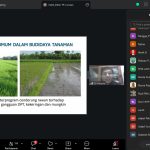
Yogyakarta, September 17, 2026 – Efforts to strengthen the capacity of laboratory personnel in the propagation of biological control agents (BACs) continue through the 2026 Technical Guidance on Isolation and Propagation of Biological Agents. Organized by the Directorate of Food Crop Protection, Ministry of Agriculture, the event featured Dr. Tri Harjaka, S.P., M.P., a lecturer in the Department of Plant Pests and Diseases (HPT), Faculty of Agriculture, Gadjah Mada University (UGM) as the resource person.
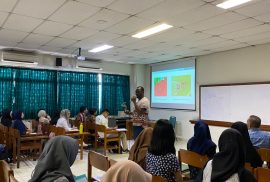
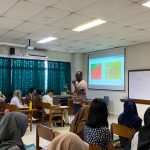
Yogyakarta, September 11, 2026 – The Department of Plant Pests and Diseases (HPT) at the Faculty of Agriculture, Universitas Gadjah Mada (UGM), hosted a guest lecturer from Victoria University for the undergraduate Integrated Pest Management (IPM) course. The lecture took place on Friday (Sept 11) at 09:00 WIB in Room 310 of the Fisheries Building and was attended by 101 students from various cohorts and study programs.
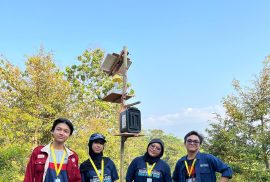
Ujungberung, July 31, 2026 –Ujungberung Village in Sindangwangi District, Majalengka Regency, is known as a major production hub for durian (Durio zibethinus), boasting extensive orchards. Currently, the onset of the dry season coincides precisely with the durian trees’ flowering period. During this critical phase, the use of chemical pesticides for pest control carries significant risk, as exposure to chemicals can cause flower buds to overheat and drop off. Furthermore, pest threats—such as fruit borers and scale insects—often lead to leaf drop, stem perforation, and fruit rot caused by borer larvae activity.