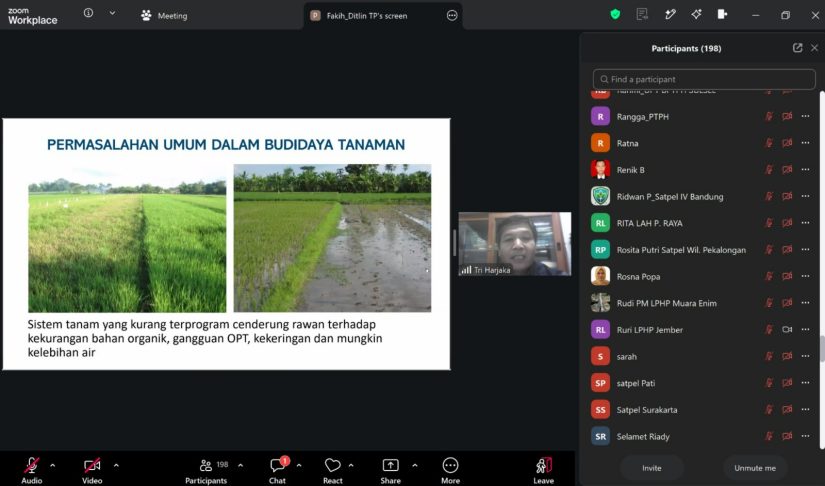
Yogyakarta, September 17, 2026 – Efforts to strengthen the capacity of laboratory personnel in the propagation of biological control agents (BACs) continue through the 2026 Technical Guidance on Isolation and Propagation of Biological Agents. Organized by the Directorate of Food Crop Protection, Ministry of Agriculture, the event featured Dr. Tri Harjaka, S.P., M.P., a lecturer in the Department of Plant Pests and Diseases (HPT), Faculty of Agriculture, Gadjah Mada University (UGM) as the resource person.
The technical guidance was held online on Thursday (September 17, 2026) starting at 8:30 a.m. WIB. The event aimed to support the strengthening of BACs propagation activities in the Pest and Disease Observation Laboratory (LPHP/LAH), particularly by increasing understanding of biological agent isolation and propagation techniques.
The event began with an opening remarks from the Director of Food Crop Protection. The main session then continued with a presentation on “Biological Agent Isolation and Propagation Techniques” by Dr. Tri Harjaka from 8:45–10:45 a.m. WIB. Following the presentation, the event continued with a general discussion and evaluation of the implementation of APH propagation at each LPHP/LAH.
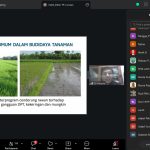
The enthusiasm of the participants was evident in the number of participants who attended the online event. Based on the Zoom meeting room display, 198 participants were registered. Participants came from various pest and disease observation laboratory units that are part of the APH propagation activities.
In her presentation, Dr. Tri Harjaka not only discussed the technical aspects of biological agent isolation and propagation but also provided an overview of the context of problems faced in plant cultivation.
One of the presentations addressed “Common Problems in Plant Cultivation.” This material demonstrated that poorly programmed planting systems can increase plant susceptibility to various problems, including lack of organic matter, plant pest infestation (OPT), drought, and the possibility of excess water.
This discussion is crucial in the context of the use of biological control agents. Pest and disease control does not stand alone but is part of comprehensive crop management. Cultivation conditions, the environment, and the presence of pests must be considered to ensure appropriate control strategies are implemented.
Through this technical guidance, participants learned about the importance of isolating and propagating biological agents as part of efforts to provide pest control agents (APH) that can be utilized in pest management. This material also provided the perspective that successful biological control requires an understanding of the agroecosystem conditions in which the control is carried out.
In addition to the presentation sessions, the activity also provided a space for general discussion and an evaluation of the implementation of APH propagation at each LPHP/LAH. This evaluation was part of a series of activities to assess the implementation of APH propagation in the field and provided a forum for exchanging experiences among implementers.
The involvement of academics from the UGM Department of Plant Protection (HPT) in this activity represents the university’s contribution to supporting human resource capacity building in the field of plant protection. Knowledge of biological agent isolation and propagation techniques is expected to support the implementation of APH propagation in the laboratory and strengthen the implementation of more sustainable pest control.
The technical guidance concluded after the completion of all activities. Through this activity, it is hoped that the capacity building of laboratory staff can continue to be carried out so that the use of biological control agents as part of pest and disease management can be better developed in various regions.